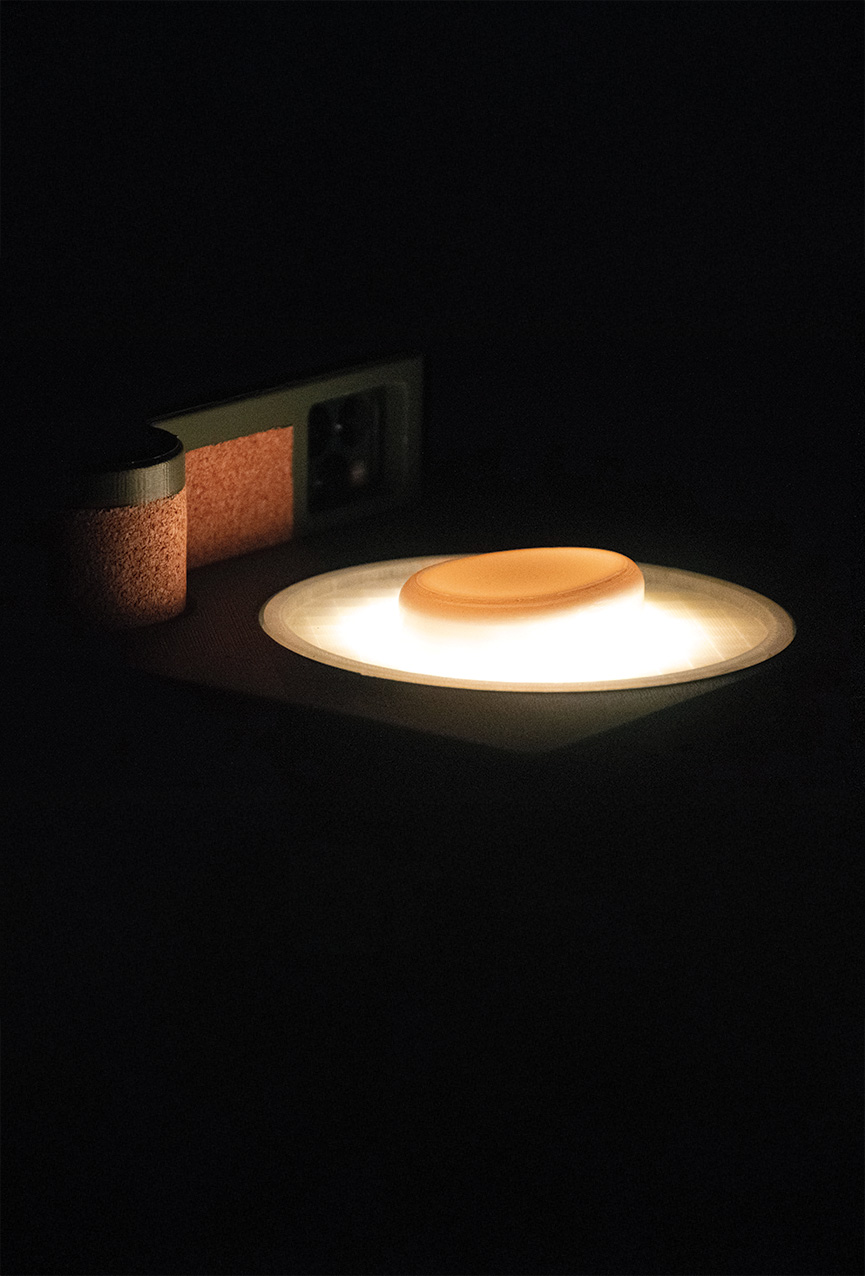
CaredFor

June, 2025 - Eindhoven University of Technology

—

M1.1 Design project

CaredFor is a speculative design project that explores how people could be empowered to (re)learn about their products and appliances to maintain, repair and value them longer. Designed for a possible 2040 context, CaredFor proposes a family of connected artefacts to extend and prolong the lifespan of appliances, focusing on reducing environmental impact by keeping existing products in use for as long as possible. The concept combines practical guidance with emotional interactions and rituals to question whether people would care for products differently if appliances would become active partners in their own care.

Context
TU/e Master Industrial Design — New Futures semester project
Team
Carolina Billep Garay, Berend de Wit and Jelle Spoek
My role
Design process structuring, contextual user research, connected experienceable prototypes and in-context validation
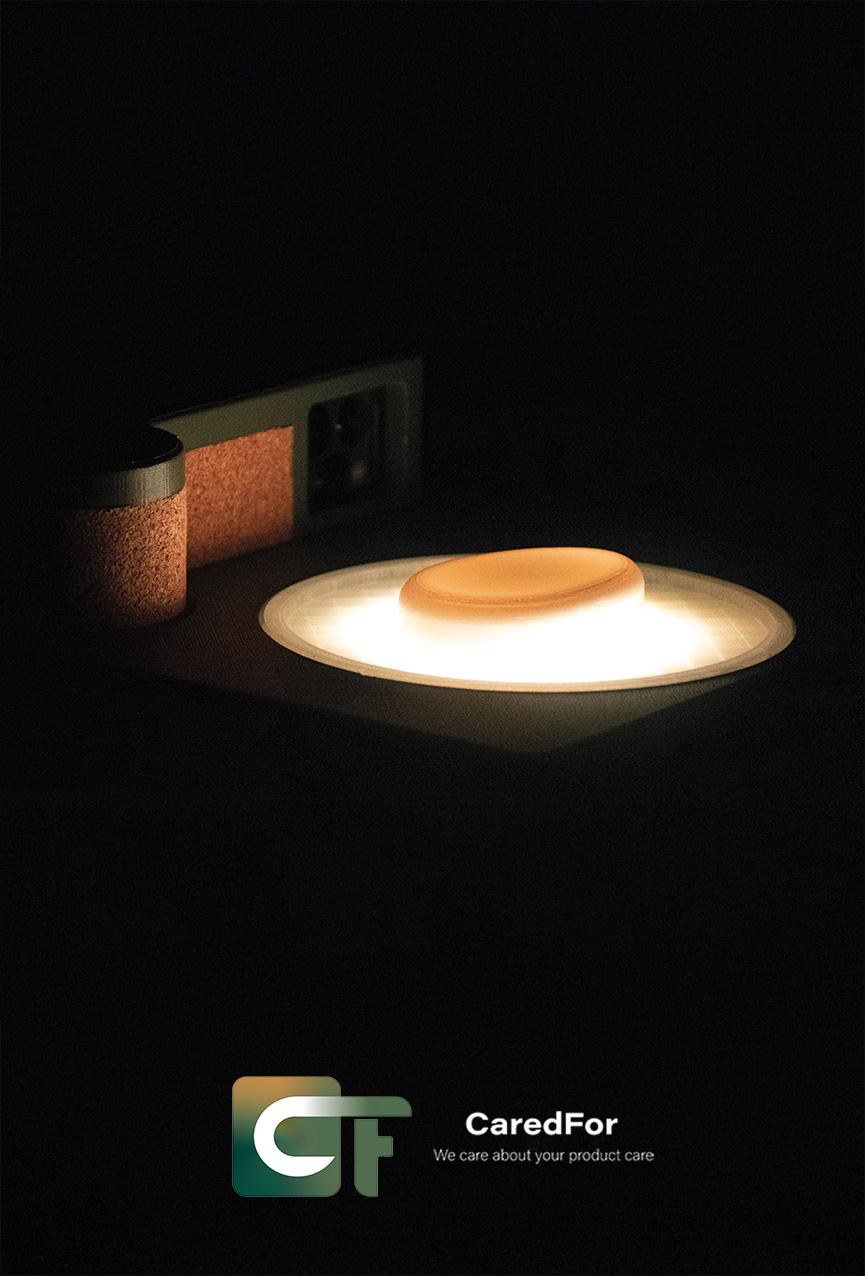
Cover image of CaredFor
Explorative immersion

Research and design process

Exploratory immersion

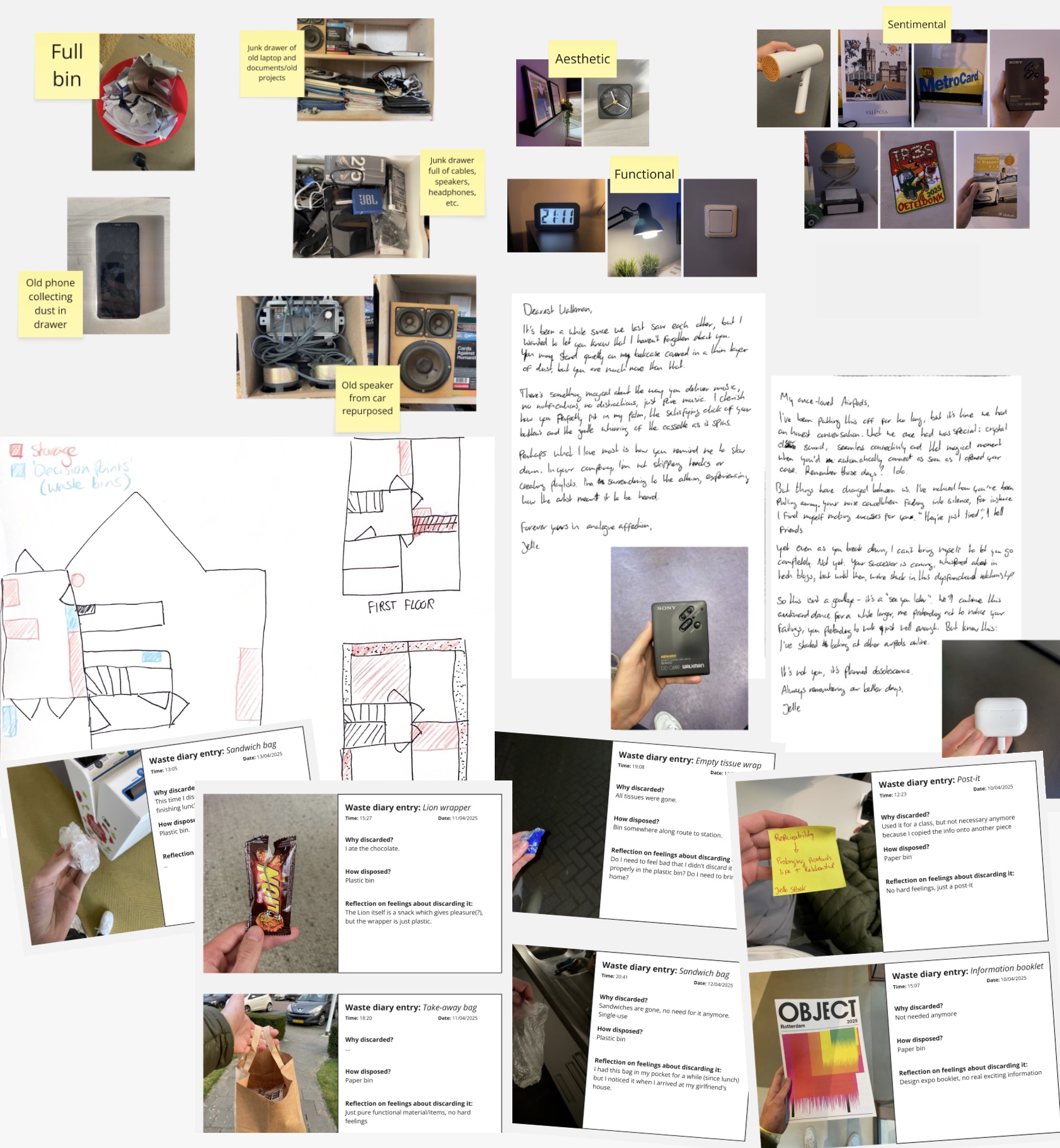
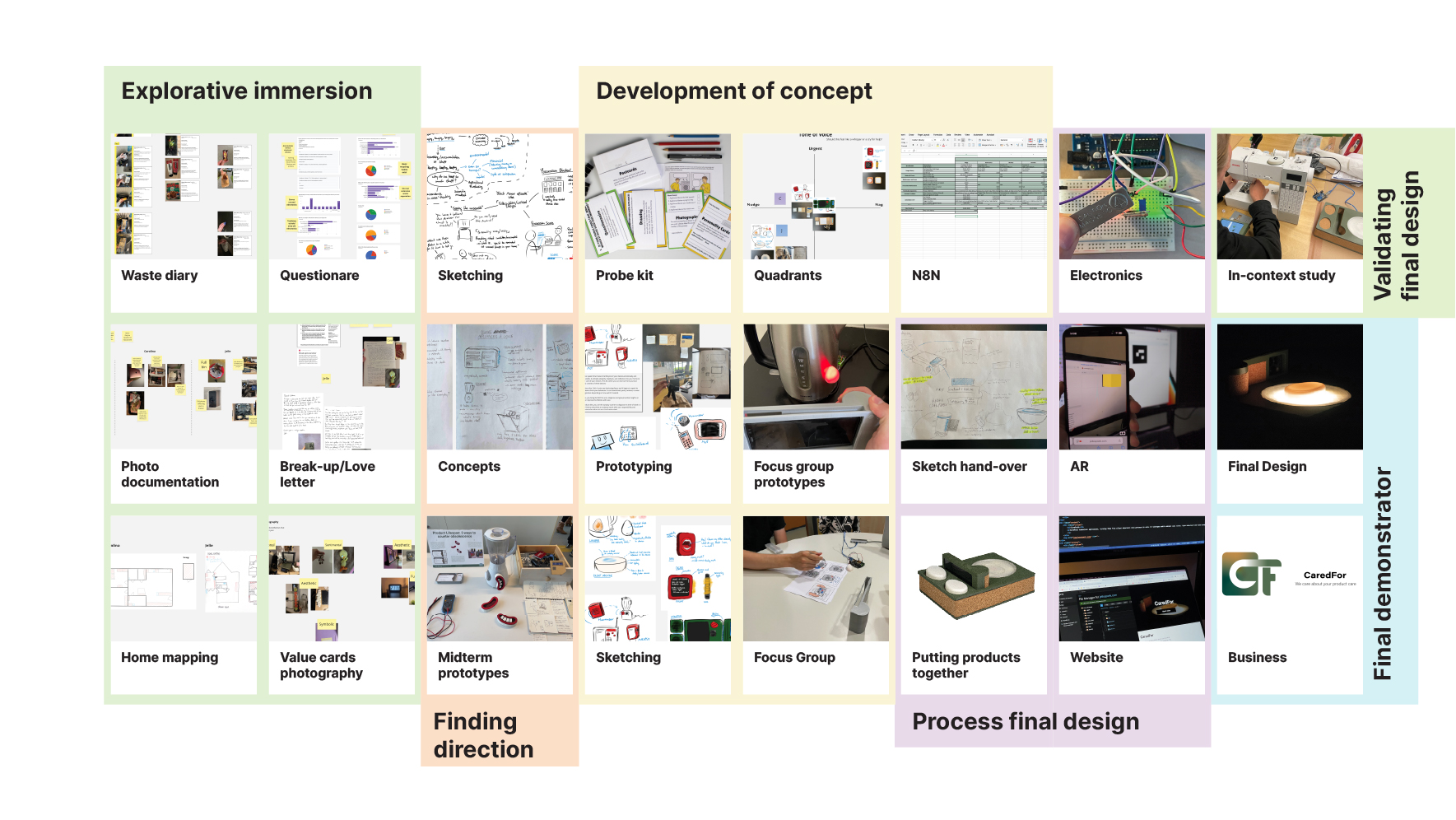
The design process started by immersing ourselves in the context with an open-ended, first-person explorative approach, allowing us to include as much information and inspiration as possible. We studied personal relationships with waste and household products through waste diaries, home mapping, photo exercises and writing break-up and love letters addressed to products. These activities led to a design opportunity on how to empower people to (re)learn to care for household products and appliances.

Overview collage of Caredfor project

Designing with people

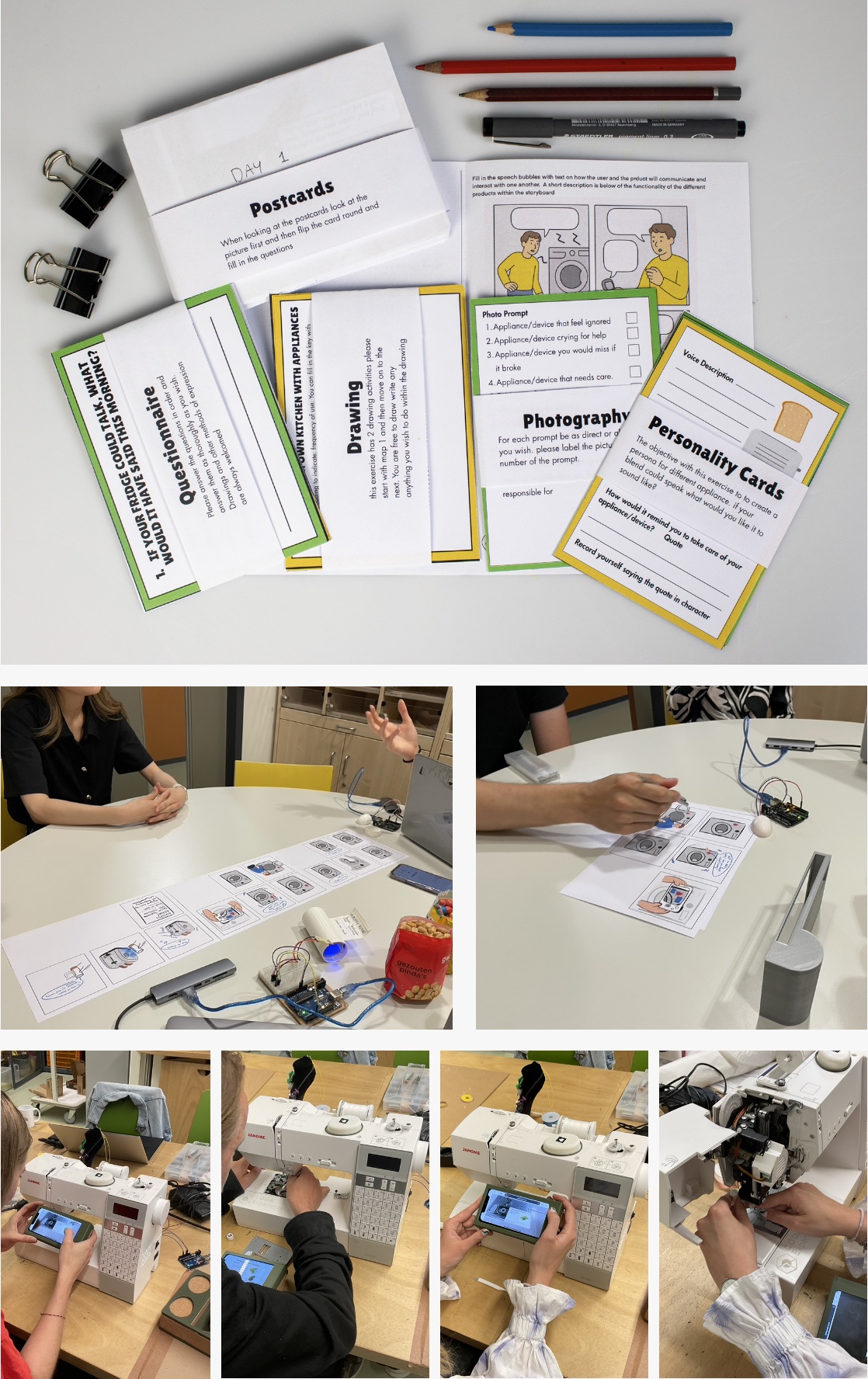
A probe kit explored how people prioritise product care, how products might communicate and whether appliances could be perceived as partners rather than passive objects. Thematic analysis showed that care depends on use, visibility and perceived value.

Process final design and validation

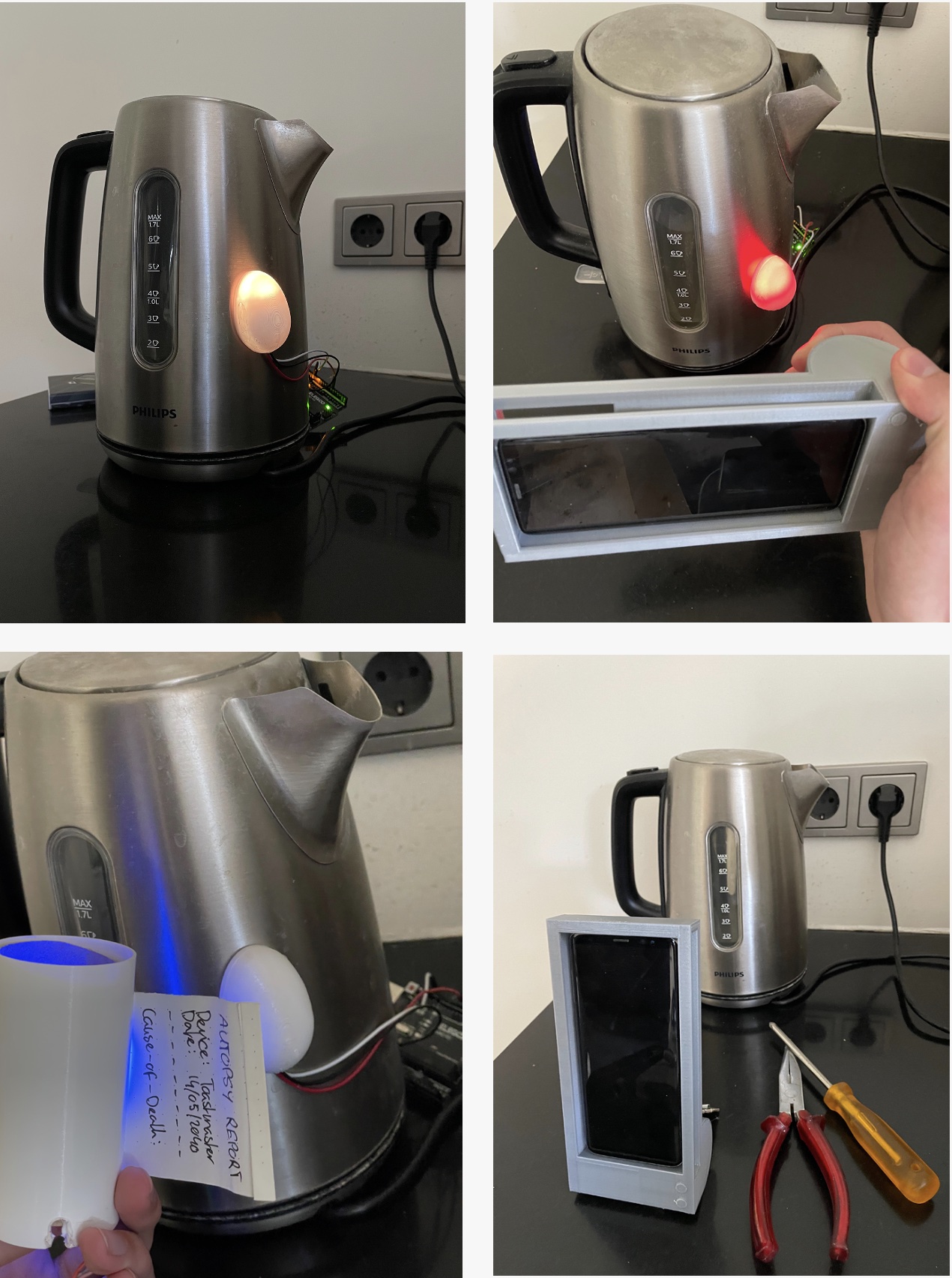
These findings were developed through rapid lo-fi prototypes. We explored functional, emotional and provocative directions, including an appliance inspection system, an artefact that gave appliances a voice and an ‘autopsy’ artefact that confronted users with product neglect. Experienceable prototypes and quadrant-based evaluations helped us compare whether interactions should be functional or emotional, subtle or intrusive and supportive or confrontational.
A focus group with discussions, role-play, storyboards and experienceable prototypes provided insights on possible future product care practices. Finally, the prototypes were validated during an in-context study within a FabLab. Participants embraced anthropomorphic interactions when they felt empowered and in control, completed unfamiliar maintenance tasks using CareScan and formed unexpectedly emotional connections with the artefacts.

Designing with people collage

Reframing care as a relationship between people and their products

Final demonstrator

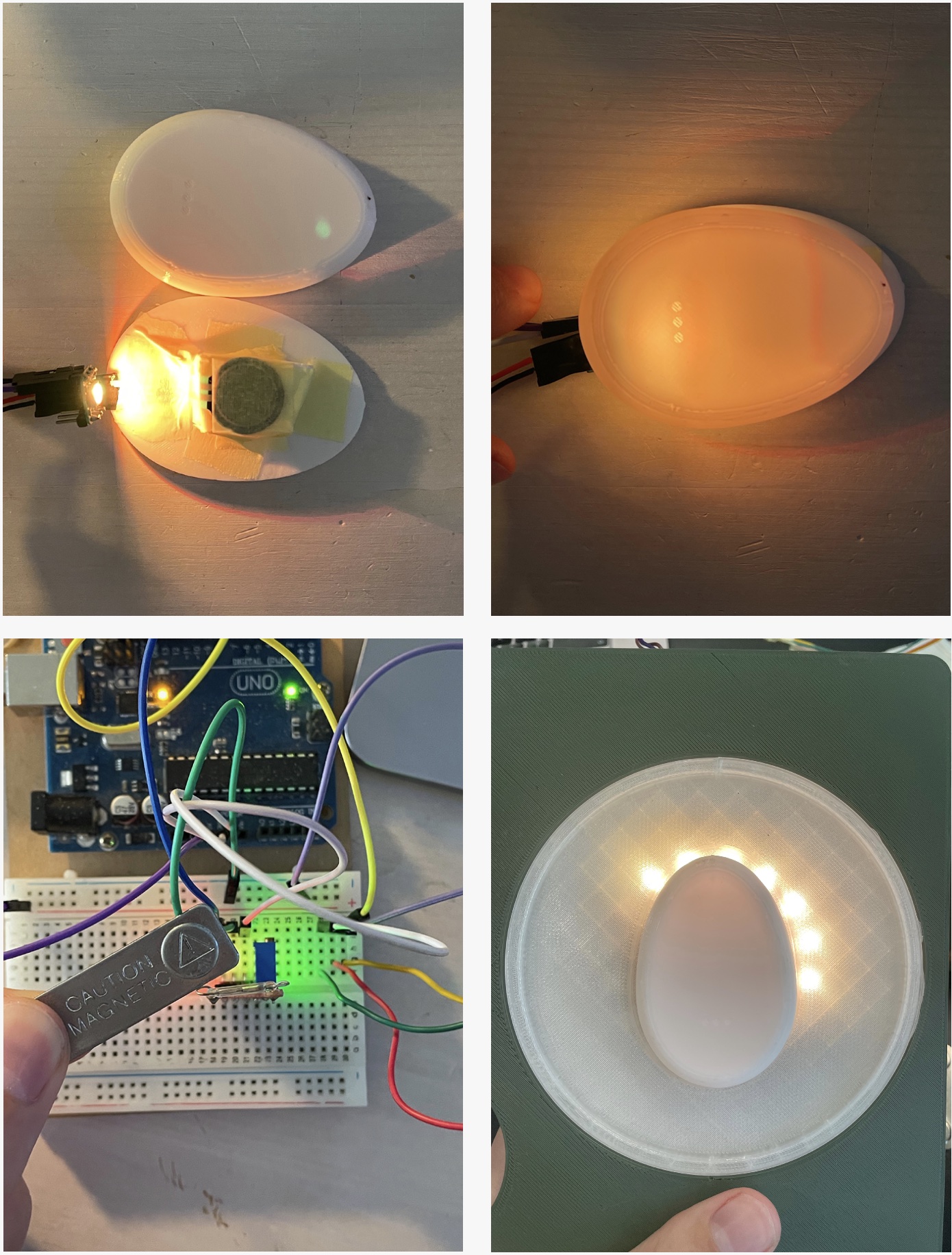
CaredFor consists of three connected artefacts that form a narrative of attachment, responsibility and release.

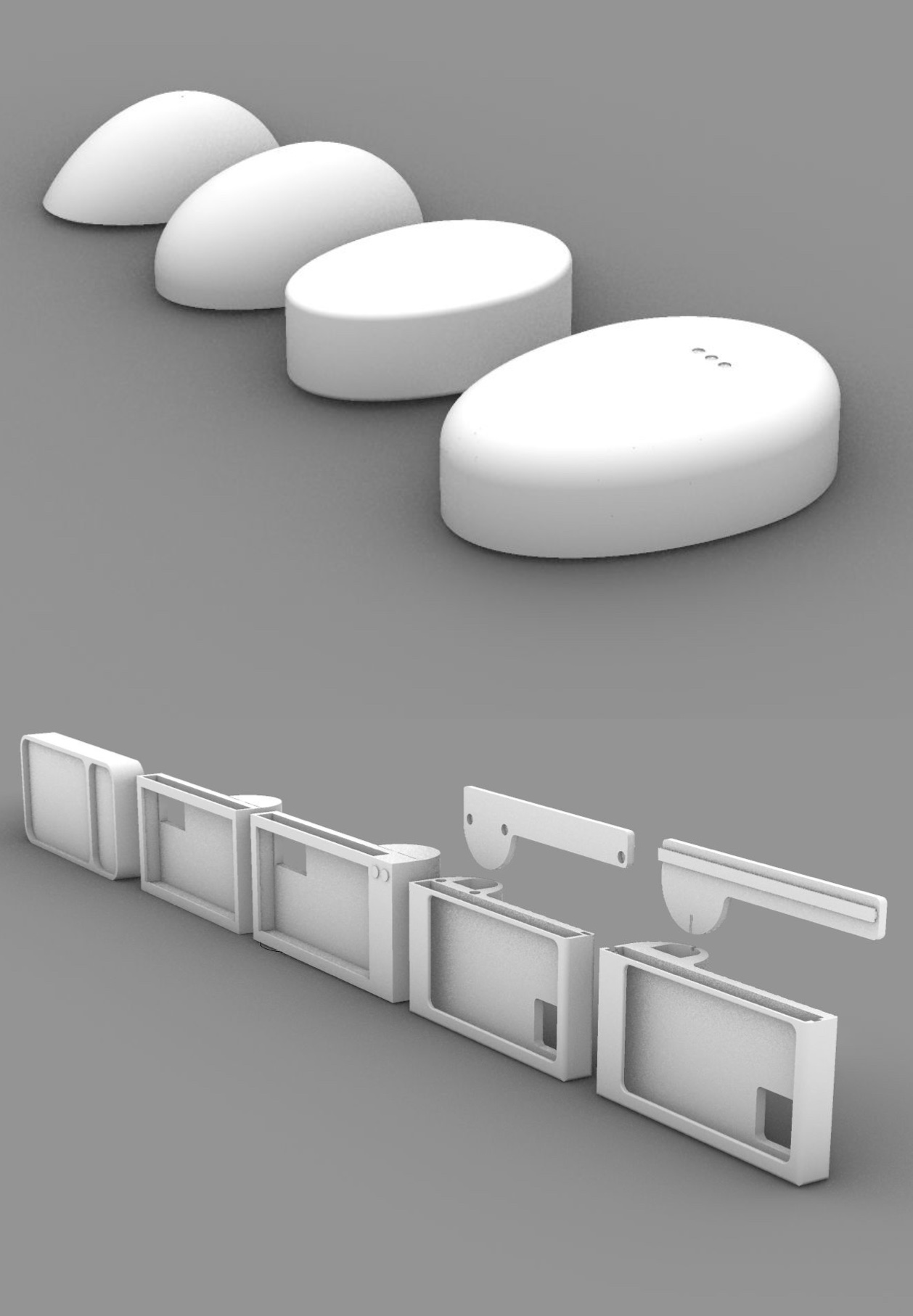
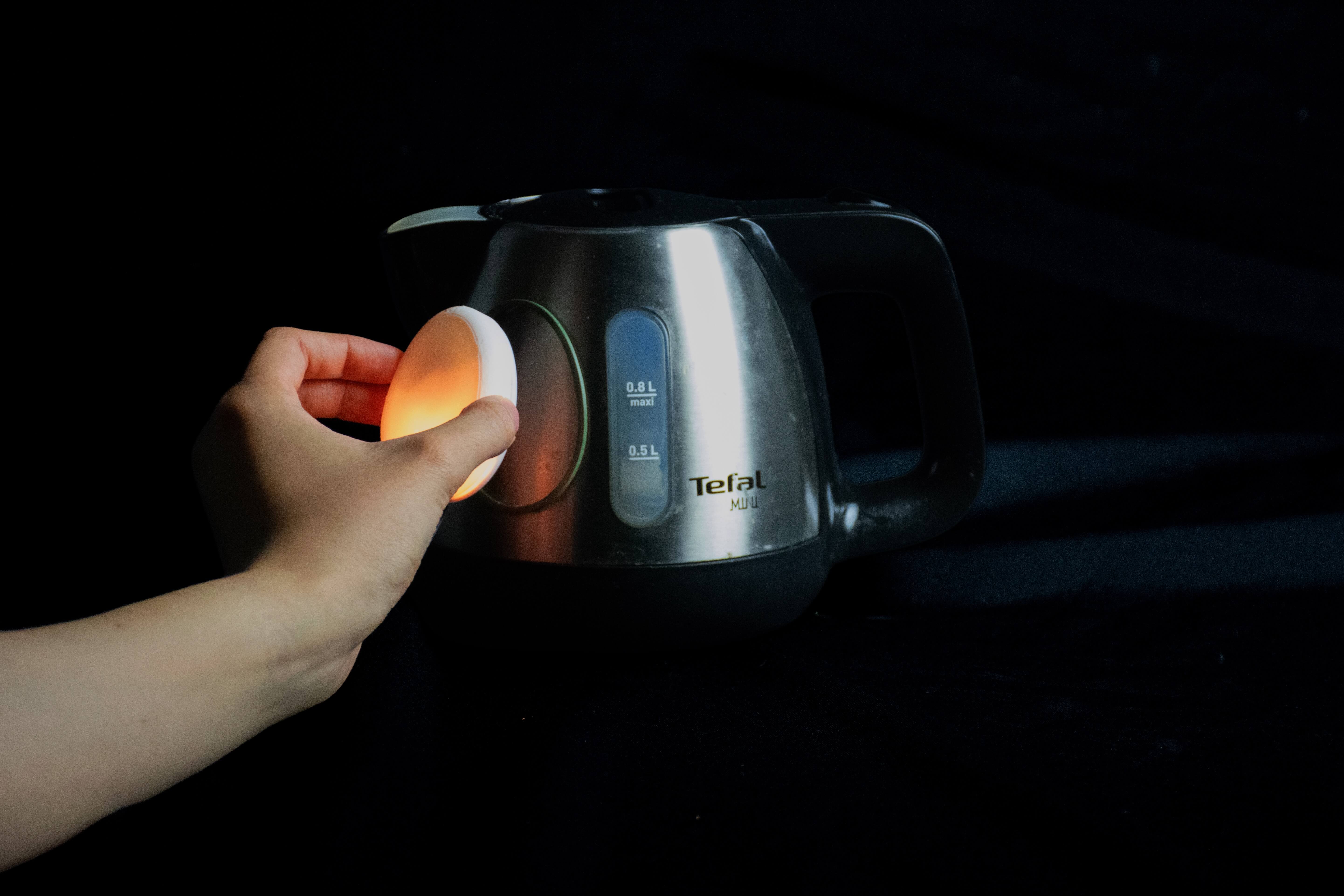
CarePuck humanises appliances, turning them from silent observers into partners in care. It leverages subtle ambient cues (color, light behaviour) and voice prompts to build a peripheral relationship with the user. By granting appliances a 'voice,' CarePuck reframes maintenance not as a chore but as mutual respect. This emotional relationship increases product value and prolongs the lifespan through proactive care. Its coloured light system ensures the communication stays non-intrusive but clear and invites intentional interaction.

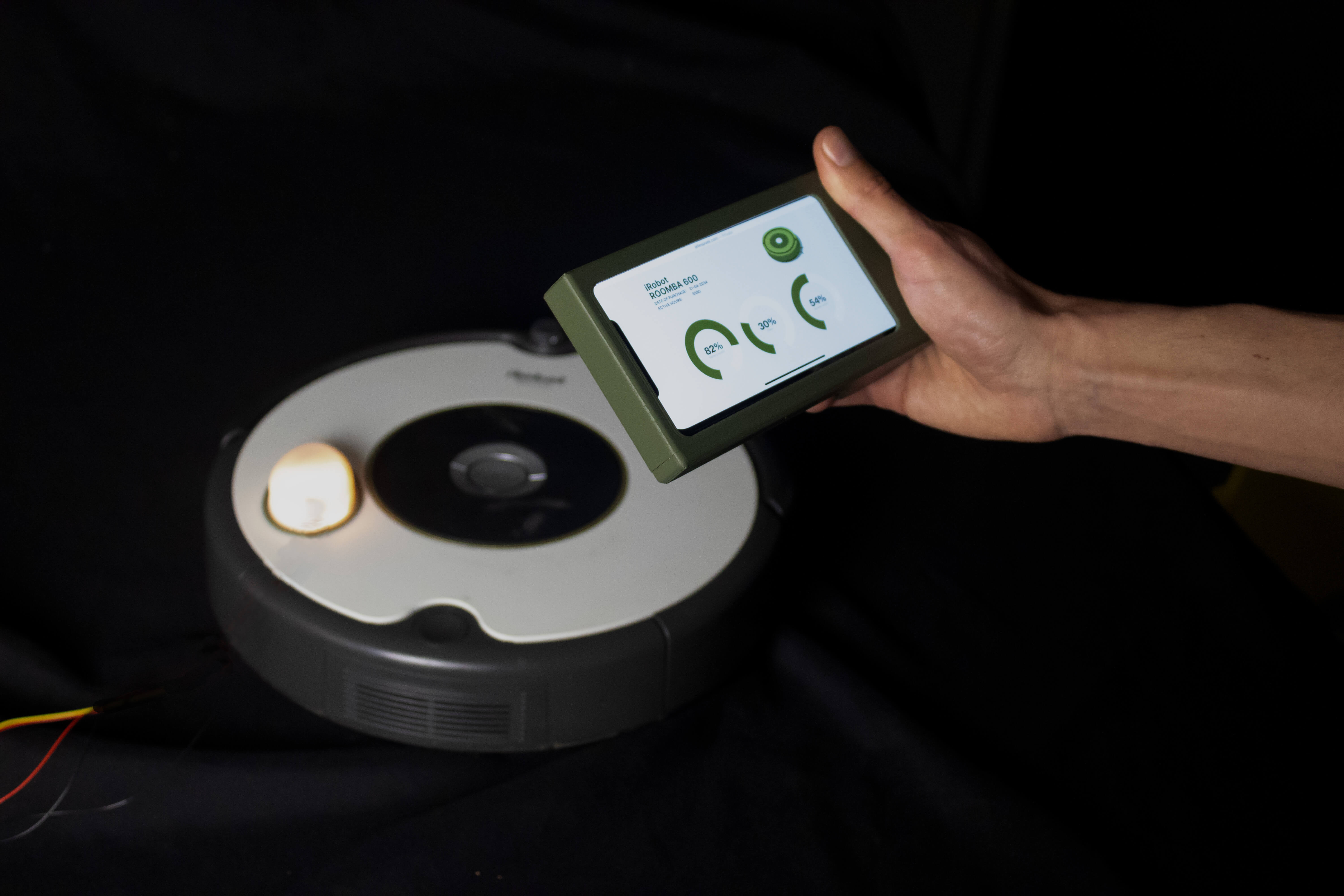
CareScan brings structured, periodic attention to appliances. It uses AR to guide and empower users with care and small repairs. CareScan works as the neutral advisor to CarePuck its emotional interaction.

CareFade transforms disposal into a moment of reflection, storytelling and ritual. By giving the appliance to ‘speak’ one last time, it shares the first or best memory together and reflects on how well they took care of it. The experience turns the end-of-life phase into a remembrance and an emotional loop that reinforces the value of long-term care.

My contribution

In this project I was responsible for incorporating multiple perspectives in the design process by conducting various user tests (probe kit, focus groups, in-context study) and the technical realisation of the prototypes (3D modeling, creative coding, AR and ESP32).