Folksam Child Bike Seat

June, 2026 - Kungliga Tekniska högskolan

—

Advanced Product Design

During my Erasmus exchange at KTH, I completed an Advanced Product Design project combining human-centred design, branding, design research and individual product design. The assignment was to design a child bike seat for an existing brand as part of an emerging circular Product-as-a-Service economy.

I designed a rear-mounted child bike seat for Liten av Folksam, a fictional brand extension of the Swedish insurance company Folksam. The design brief focused on understanding the users, context of use, functionality and interactions around child bike seats, before identifying design opportunities. During the branding module, our group analysed Folksam and created Liten av Folksam, an endorsed brand extension. The last phase was to individually design the child bike seat by combining the insights of the human-centered design and branding modules.
Context
KTH Integrated Product Design — Erasmus exchange
Project structure
Group-based user research and branding, followed by individual product design
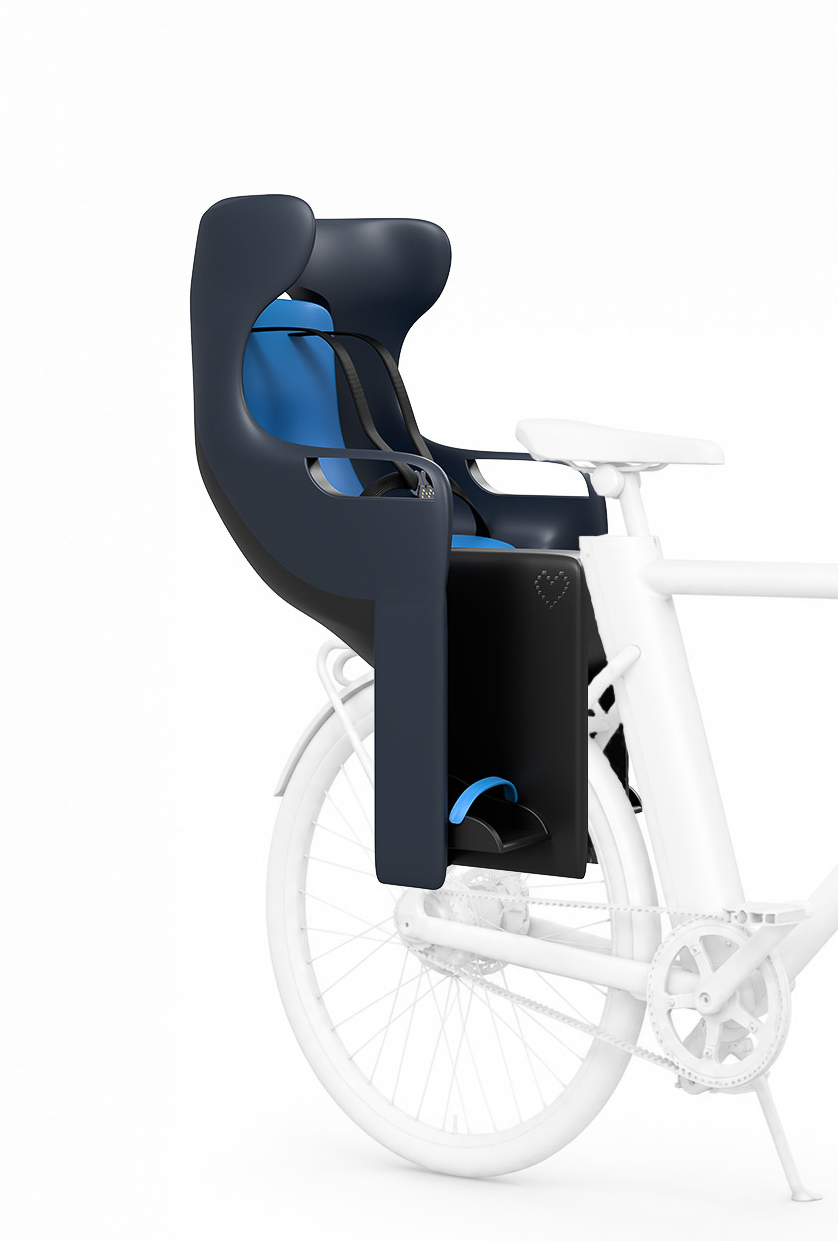
Cover image of Folksam child bike seat
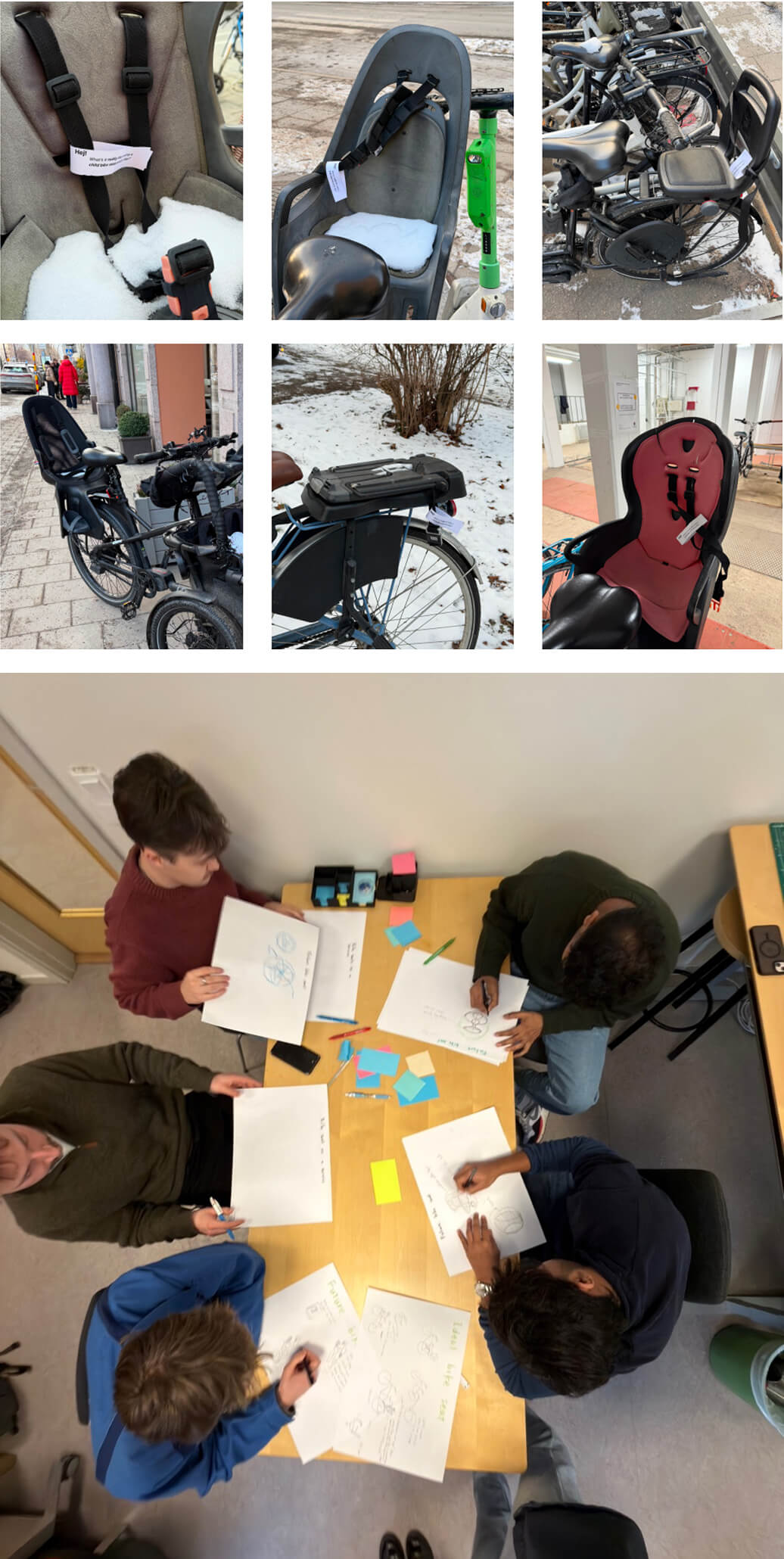
Human-centered design research collage

Human-centered design research

Understanding the context

We started broadly by investigating existing child-transport products and how bike seats are used in everyday life. The research moed through a funnel from exploratory to increasingly focused methods:

Market research and store visits helped us compare front- and rear-mounted seats, trailers, cargo bikes, harnesses and buckles. Observing bike seats ‘in the wild’ revealed a difference between brand new products in the store and weathered, used seats found on bikes.
Interviews and observations provided deeper insights into routines, concerns and values. A central finding was that parents do not only need the product to be safe, but also that it feels safe. A major pain point is the moment of placing and securing the child. Parents often do this while the child is restless or uncooperative, which makes these interactions important. The buckle and straps must be clear and easy to use. A survey of 157 respondents from Sweden, Germany, China and the Netherlands helped validate findings across a broader sample and identified differences between use contexts.

Brand and service design

Folksam’s identity centres on security, accessibility, responsibility and collective support. Its customer-owned structure is expressed through a “we before me” mindset and the values of togetherness, commitment and responsibility.

We translated these values into product principles:
Responsibility becomes safety
Protection is concentrated around vulnerable areas and communicated through quiet, dependable features rather than alarming visual signals.

Togetherness becomes accessibility
Products should feel understandable, democratic and appropriate for everyday families.

Commitment becomes longevity
Adjustable components, durable materials and replaceable wear parts support extended and repeated use.

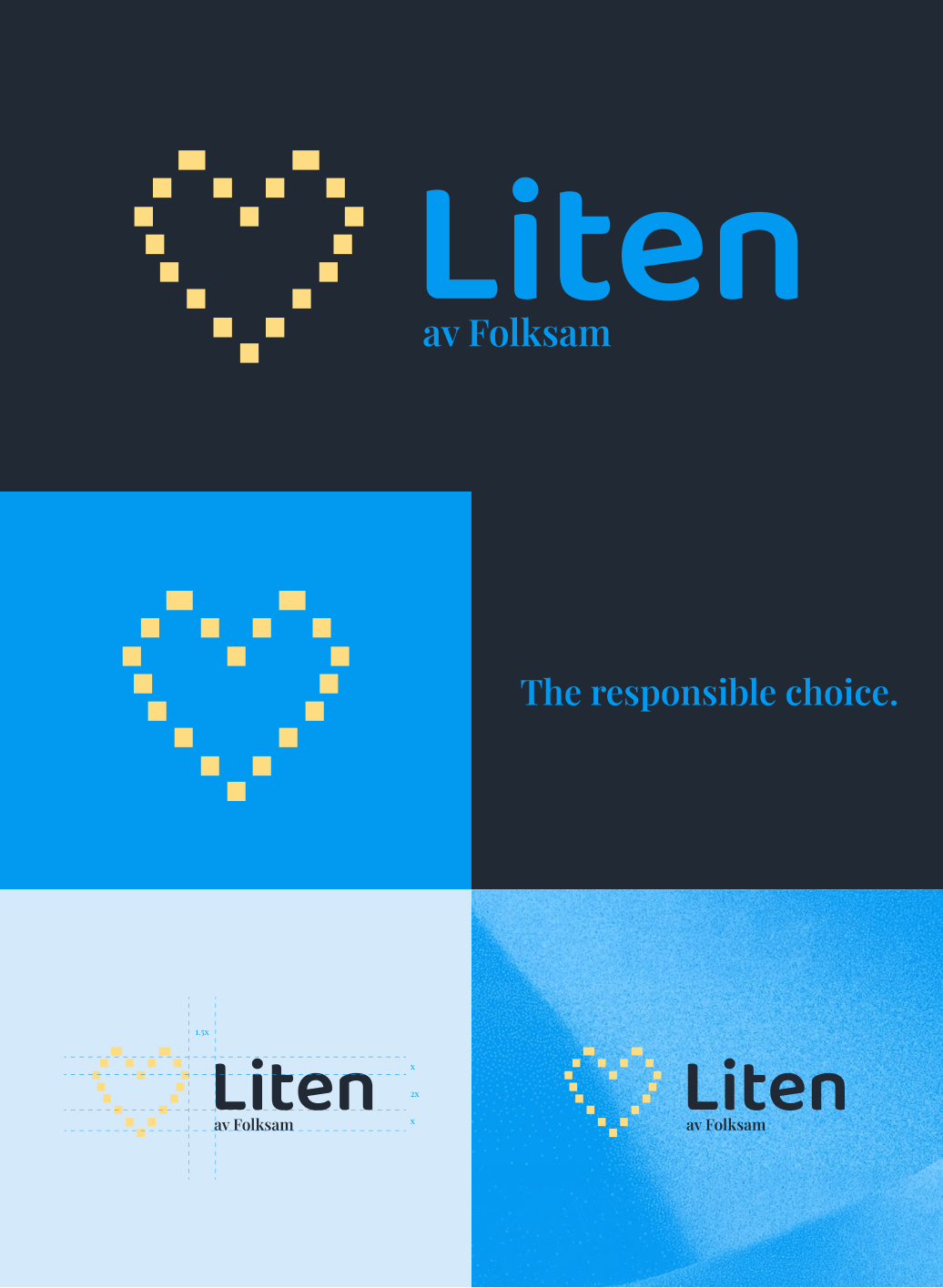
Overview of Liten av Folksam brand
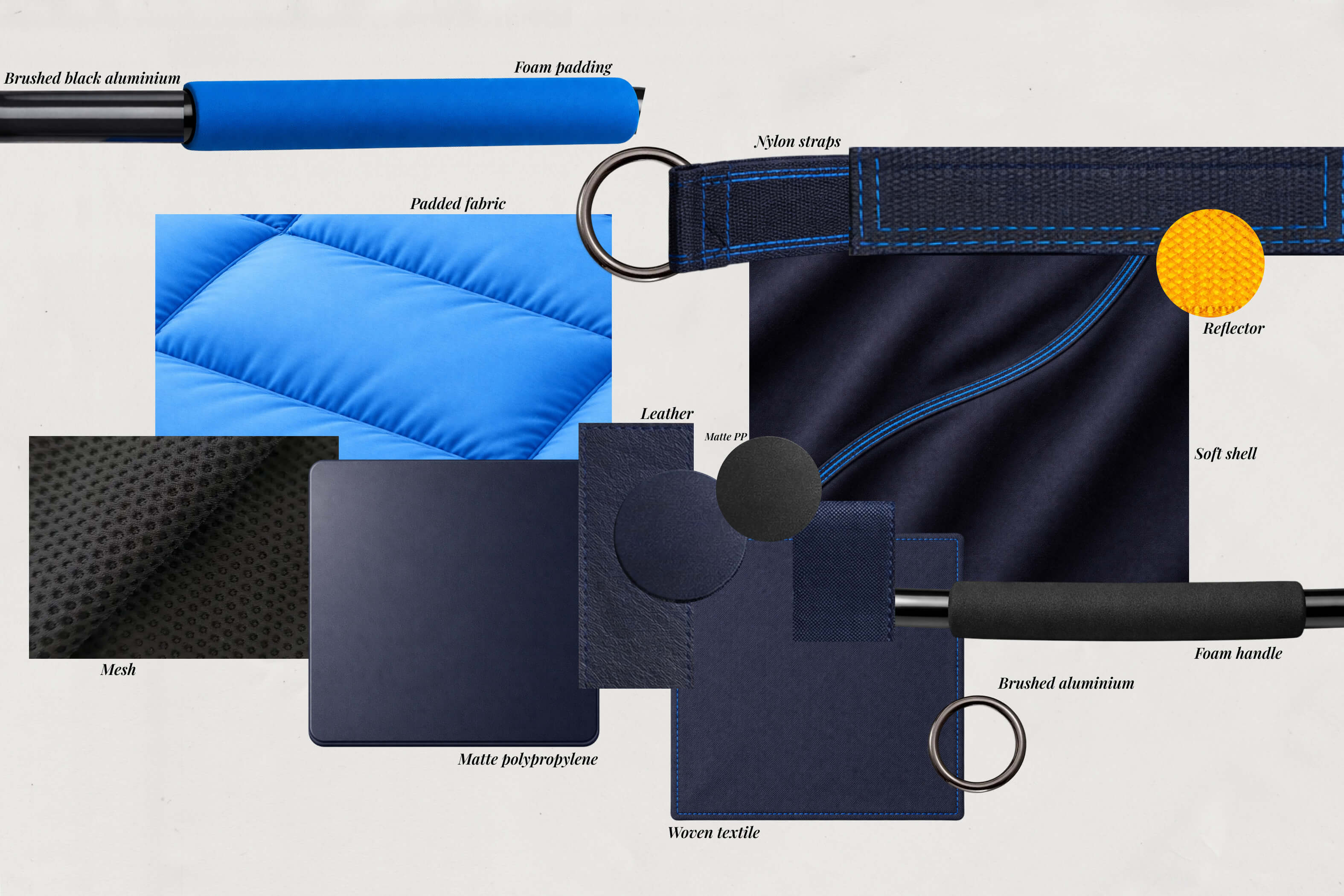
Moodboard of materials

The responsible choice

Designing the child bike seat

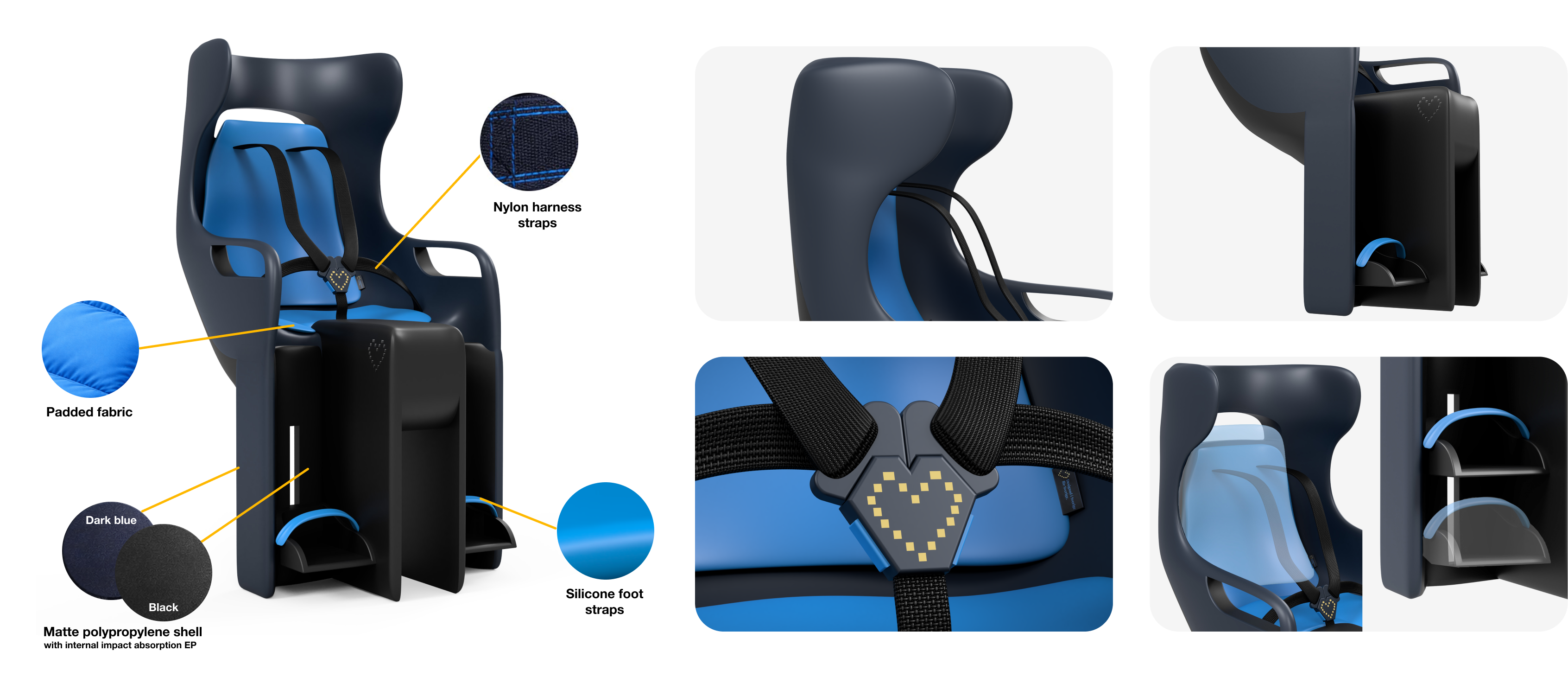
The Liten av Folksam child bike seat translates responsibility, togetherness and commitment into an everyday safe product. The design protects the most vulnerable areas, adjusts as the child grows and maintains accessible to be trusted in daily family routines.

The final concept is designed for the daily, community-minded parent who cycles for commuting, shopping and everyday family activities but who also values the emotional bonds that is formed when going out and about with their child. This group sits on the overlap of the daily commuter segment gained from the user studies and the brand audience of Liten av Folksam, responsible parents who want safe, accessible and shared solutions.

Folksam av Liten Child Bike Seat